
Planning an international festival, corporate event, trade show or cultural celebration?
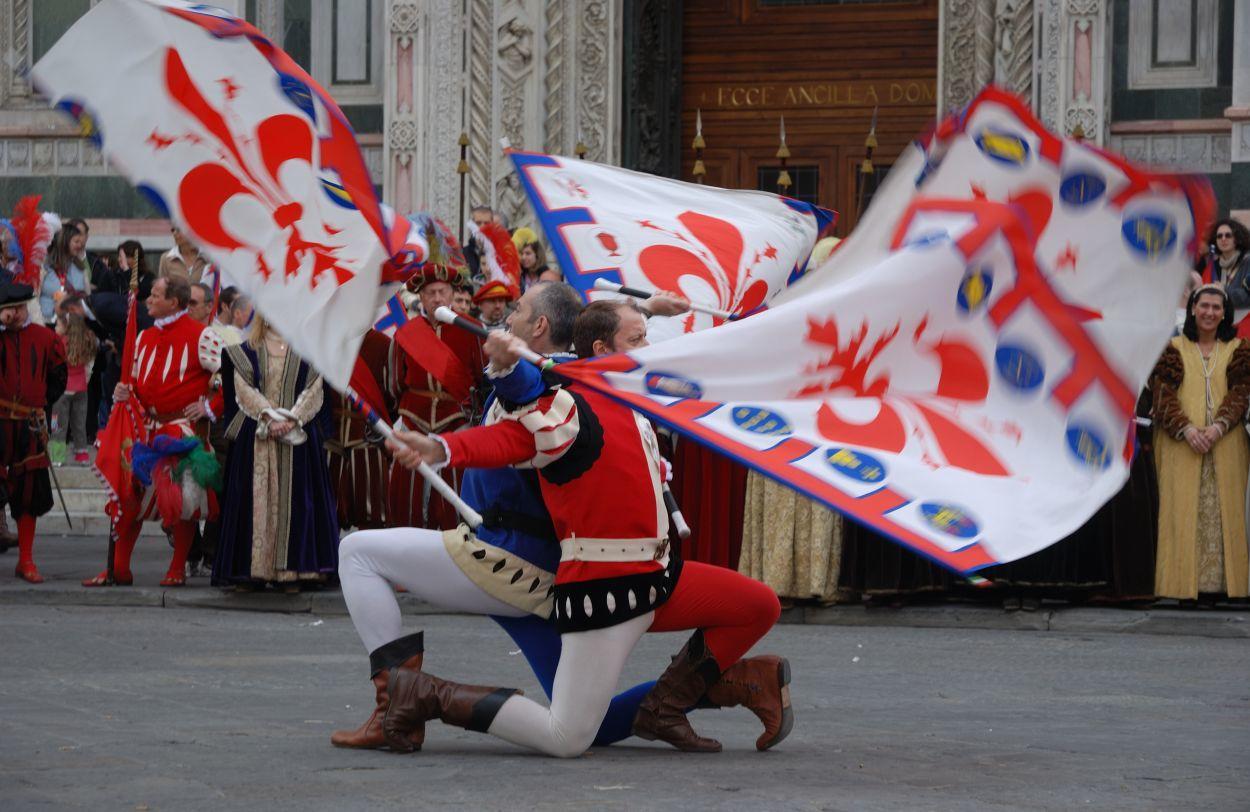
A traditional Italian flag-waving performance can give your programme a distinctive visual identity, combining spectacular flag movements, live percussion and a connection to Italy’s cultural heritage.
This guide explains how to choose the right format, prepare your enquiry and coordinate the practical arrangements for an international event.
Is a Flag-Waving Performance Right for Your Event?
A traditional Italian flag-waving performance can be a distinctive addition to international festivals, corporate events, trade shows, conventions, official ceremonies, diplomatic receptions, parades and cultural celebrations.
Depending on the programme, the performers might open an event, welcome a delegation, provide a featured performance or take part in a procession.
The first decision is what role the performance should play in your event.
Choose a Group with a Genuine Cultural Identity
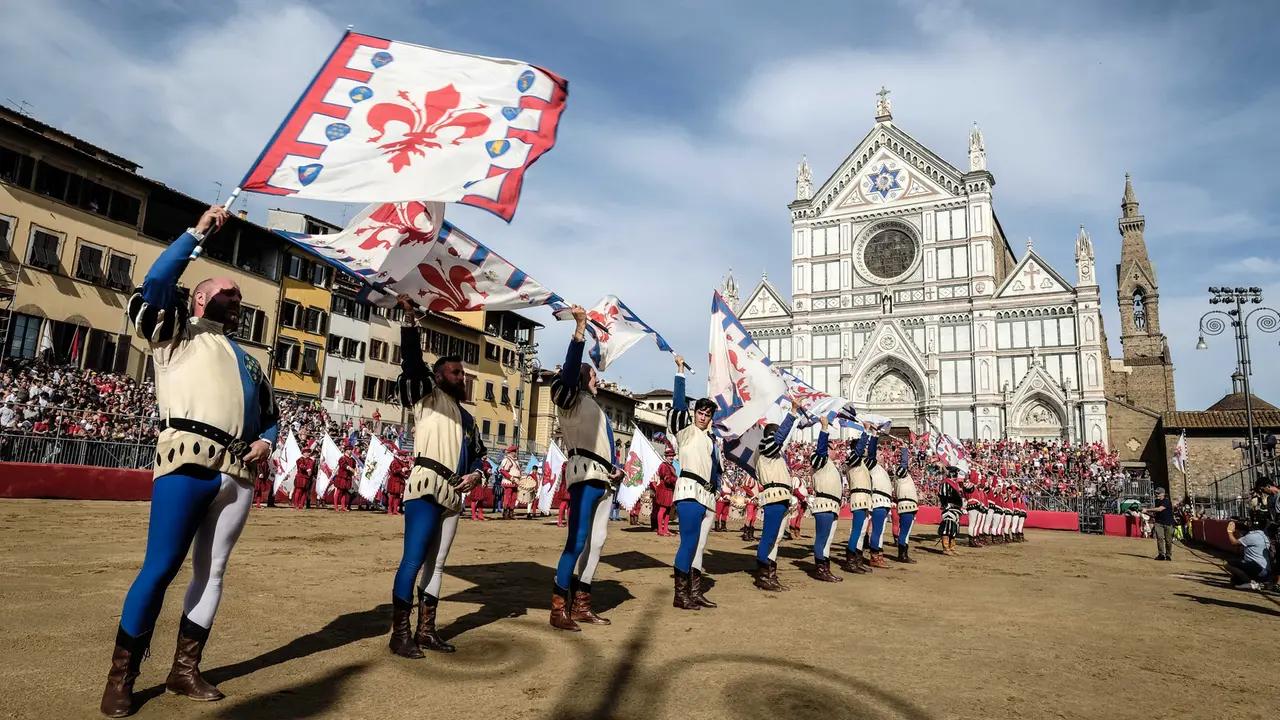
Italian flag waving, known as sbandieramento, is a traditional performance art involving coordinated flag movements, formations and, in many groups, live music performed with drums and trumpets.
The Bandierai degli Uffizi are the official flag wavers of Florence. Founded in 1973, the group represents a Florentine tradition connected with the city’s historical pageantry, combining flags, historical costumes and live music.
When choosing a group, consider its cultural background, experience, performance style and suitability for your event.
Discover more about the Florentine flag-waving tradition and the Bandierai degli Uffizi.
Decide How the Performance Will Fit into Your Programme
Before contacting a group, consider how the performance could fit into your event programme.
The most suitable format depends on your programme, venue, schedule and practical arrangements. Explore the performance formats available from the Bandierai degli Uffizi to understand the options.
Coordinate the Venue and Event Schedule
The venue and event schedule influence how a performance can be organised. Sharing practical information early helps identify suitable options.
For a procession, explain the route, timing, stopping points and movement restrictions. For a performance in a defined area, describe the available layout and audience arrangement.
You do not need every detail finalised before making contact. An initial description is enough to begin the discussion.
Plan Travel, Accommodation and Other Logistics
When inviting performers from another country, travel and hospitality arrangements are an important part of the planning process.
Depending on the event and destination, these may include:
These matters should be discussed and agreed on a case-by-case basis. The location, event dates, schedule and size of the delegation can all affect the arrangements.
Contact the group as early as possible, especially if your event has fixed dates or requires international travel. If your schedule allows it, provide alternative dates.
Prepare a Clear Booking Enquiry
A useful first enquiry gives the performers enough information to assess the event and suggest a suitable approach.
You do not need to finalise every operational detail before getting in touch. The goal of the first enquiry is to establish whether the event is feasible and identify the next steps.
Example: An Effective Initial Enquiry
Here is an example of the information you could include in your first message.
We are organising an international cultural festival in [city, country] on [date]. We are interested in a traditional Italian flag-waving performance as part of our opening programme. The event is expected to welcome approximately [audience size] visitors, and the proposed performance area is [brief description].
Could you advise on availability and the most suitable format for our programme? We can provide further details about the venue, schedule and travel arrangements as the planning progresses.
What Happens After You Make Contact?
After receiving your enquiry, the first step is to establish whether the group is available for the proposed dates and destination.
If the event appears feasible, the next discussion can cover:
1 – The most suitable performance format.
2 – The programme, timing and venue arrangements.
3 – Travel, accommodation and other practical requirements.
4 – Responsibilities, commercial terms and any remaining details.
Availability and arrangements must be confirmed for each event. A clear initial enquiry makes it easier to identify what information is still needed.
Event Organiser’s Checklist
Before submitting your enquiry, check which of these details you can provide.
If some information is not yet available, you can still make an initial enquiry and explain what remains to be decided.
Bring a Florentine Tradition to Your Event
A traditional Italian flag-waving performance can bring movement, live music and a distinctive cultural identity to an international programme.
Share your event details, preferred dates and the role you have in mind. The Bandierai degli Uffizi can then assess availability and discuss the most suitable format and practical arrangements.